DOST Scholarship Courses 2027: Complete List of Priority Programs
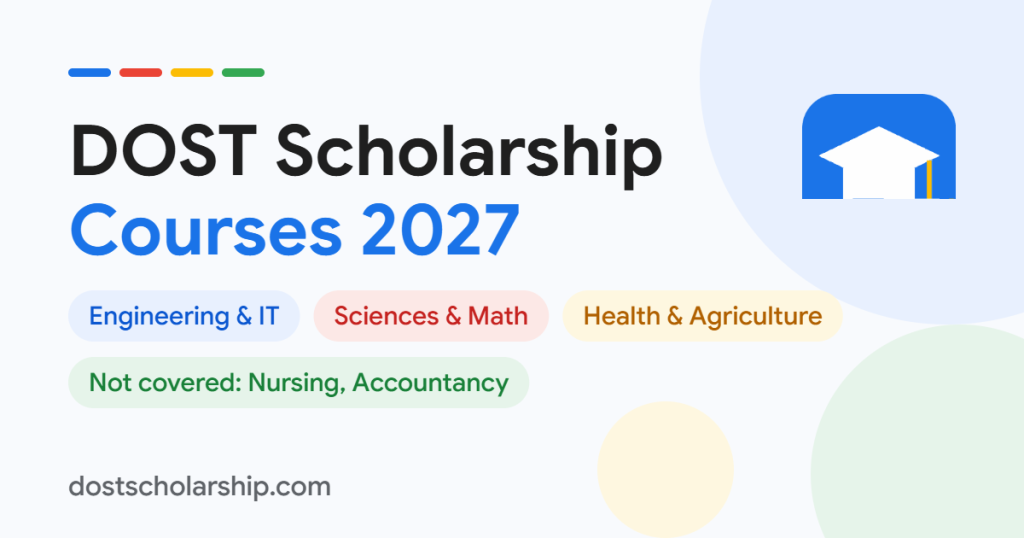
Quick answer: DOST scholarship courses are priority science and technology programs in six main fields: science and mathematics, engineering, computing and IT, health sciences, science and math teacher education, and agriculture, forestry and fisheries. Nursing and Accountancy are not covered, and the list can change every cycle.
For applicants living in the Philippines, the DOST Scholarship Courses 2027 list shows every priority program you can take as a DOST scholar. These include science, technology, engineering, mathematics, agriculture and other approved fields. Based on the latest 2026/2027 update, applicants should check the official DOST-SEI priority course list before choosing a degree, because only approved programs are covered.
The Department of Science and Technology – Science Education Institute (DOST-SEI) offers the DOST Scholarship for undergraduate programs through two tracks: the Merit Scholarship and the RA 7687 Scholarship. The scholarship covers educational expenses so scholars can focus on their studies. To keep it, scholars must enroll in an approved course at an eligible college or university.
The DOST scholarship courses offered cover many fields, including engineering, information technology, computer science, agriculture, biology, chemistry, physics, mathematics, health sciences and science education. However, not all courses are covered. For example, Nursing, Accountancy and Criminology are not on the list of approved priority programs. Always confirm both your course and your school before applying.
What Are DOST Priority Courses?
DOST priority courses are the degree programs approved and supported by the Department of Science and Technology – Science Education Institute (DOST-SEI). They are mainly in science, technology, engineering, agriculture and mathematics, plus selected health, design and teacher education programs.
Based on the latest 2026/2027 update, eligible programs include Computer Science, Information Technology, Engineering, Biology, Chemistry and many more. You must enroll in one of these approved courses at an eligible college or university to qualify for and keep the scholarship. The same list of DOST scholarship courses applies to both new undergraduate scholars and JLSS scholars.
Complete List of DOST Scholarship Courses
Here is a quick DOST scholarship courses list by field of study:
| No. | Field of Study | DOST Scholarship Courses |
|---|---|---|
| 1 | Agriculture | Agriculture, Agribusiness, Agricultural Engineering, Animal Science, Fisheries, Forestry |
| 2 | Engineering | Civil, Mechanical, Electrical, Chemical, Computer, Electronics, Industrial Engineering |
| 3 | Computer and IT | Computer Science, Information Technology, Data Science, Artificial Intelligence, Cybersecurity |
| 4 | Natural Sciences | Biology, Chemistry, Physics, Mathematics, Geology, Microbiology |
| 5 | Health Sciences | Medical Laboratory Science, Medical Technology, Pharmacy, Public Health, Human Biology, Psychology, Speech Pathology |
| 6 | Environmental Sciences | Environmental Science, Marine Biology, Marine Science, Agroforestry |
| 7 | Food and Nutrition | Food Technology, Food Science, Nutrition, Community Nutrition |
| 8 | Mathematics and Statistics | Applied Mathematics, Applied Statistics, Statistics, Mathematics Education |
| 9 | Science Education | Biology Education, Chemistry Education, Physics Education, Science Education |
| 10 | Architecture and Design | Architecture, Industrial Design, Clothing Technology |
| 11 | Specialized Engineering | Aerospace, Biomedical, Geodetic, Materials, Mining, Petroleum Engineering |
| 12 | Other Applied Sciences | Biotechnology, Biochemistry, Sports Science, Library and Information Science, Development Communication (major in Science Communication), Energy Systems Management |
Some programs are covered only at specific universities (for example, programs offered only in the UP System, Ateneo, De La Salle or UST). Check the official list for these notes.
Available Fields of DOST Scholarship Courses
Below is the detailed list of DOST scholarship courses covered in each field.
Engineering Programs
| Field | Courses |
|---|---|
| Civil Engineering | BS Civil Engineering |
| Mechanical Engineering | BS Mechanical Engineering, BS Mechatronics Engineering |
| Electrical Engineering | BS Electrical Engineering |
| Chemical Engineering | BS Chemical Engineering |
| Computer Engineering | BS Computer Engineering |
| Electronics Engineering | BS Electronics Engineering, BS Electronics and Communications Engineering |
| Aerospace Engineering | BS Aeronautical Engineering, BS Aerospace Engineering |
| Industrial Engineering | BS Industrial Engineering |
| Environmental Engineering | BS Environmental Engineering, BS Environmental and Sanitary Engineering |
| Other Engineering Fields | BS Biomedical Engineering, BS Geodetic Engineering, BS Materials Engineering, BS Mining Engineering, BS Petroleum Engineering, BS Metallurgical Engineering, BS Naval Architecture and Marine Engineering |
Sciences (Biology, Chemistry, Physics, etc.)
| Field | Courses |
|---|---|
| Biology | BS Biology, BS Biology for Teachers |
| Chemistry | BS Chemistry, BS Chemistry for Teachers, BS Biochemistry |
| Physics | BS Physics, BS Applied Physics, BS Physics for Teachers |
| Environmental Sciences | BS Environmental Science |
| Earth Sciences | BS Geology, BS Geography |
| Life Sciences | BS Biotechnology, BS Microbiology, BS Life Sciences |
| Other Sciences | BS Astronomy, BS Meteorology, BS Molecular Biology and Biotechnology, BS Marine Biology, BS Marine Science |
Mathematics & Statistics
| Field | Courses |
|---|---|
| Mathematics | BS Mathematics, BS Applied Mathematics |
| Applied Mathematics | BS Applied Mathematics major in Mathematical Finance |
| Statistics | BS Statistics, BS Applied Statistics |
| Mathematics Education | BS Mathematics for Teachers |
| Combined Programs | BS Mathematics and Science Teaching |
Information Technology / Computer Science
| Field | Courses |
|---|---|
| Computer Science | BS Computer Science |
| Information Technology | BS Information Technology, BS Information Technology Systems |
| Information Systems | BS Information Systems, BS Management Information Systems |
| Data Science | BS Data Science, BS Data Science and Analytics |
| Artificial Intelligence and Cybersecurity | BS Artificial Intelligence, BS Cybersecurity |
| Information and Communications | BS Information and Communications Technology |
| Specialized Programs | BS Industrial Management Engineering – Information Technology |
Health and Medical Sciences
| Field | Courses |
|---|---|
| Medical Technology | BS Medical Technology / BS Medical Laboratory Science |
| Pharmacy | BS Pharmacy (4-year), BS Pharmacy major in Clinical Pharmacy (5-year), BS Industrial Pharmacy, BS Pharmaceutical Sciences |
| Nutrition | BS Nutrition and Dietetics, BS Nutrition, BS Community Nutrition |
| Public and Basic Health Sciences | BS Public Health, BS Health Sciences, BS Basic Medical Sciences, BS Human Biology |
| Psychology and Rehabilitation | BS Psychology, BS Speech Pathology, BS Prosthetics and Orthotics |
Teacher Education (Science & Math)
| Field | Courses |
|---|---|
| Elementary Education | Bachelor in Elementary Mathematics and Science Education, BEEd major in Mathematics, BEEd major in Science and Health |
| Mathematics Education | Bachelor in Mathematics Education, BSE Mathematics |
| Biology Education | Bachelor in Science Education major in Biology, BSE Biological Sciences, BSE Biology |
| Chemistry Education | BSE Chemistry, BSE Biology-Chemistry |
| Physics Education | BSE Physics, BSE Physical Sciences |
| General Science Education | BSE General Sciences, BSE Science |
| Combined Science Programs | BSE Physics-Chemistry, BSE Physics-Mathematics |
| Technology Education | Bachelor in Technology and Livelihood Education specializing in Information and Communications Technology |
Agriculture, Fisheries, Forestry
| Field | Courses |
|---|---|
| Agriculture | BS Agriculture, BS Agricultural Technology, BS Agricultural Education |
| Agribusiness | BS Agribusiness, BS Agribusiness Economics, BS Agribusiness Management |
| Agricultural Engineering | BS Agricultural Engineering, BS Agricultural and Biosystems Engineering |
| Animal Sciences | BS Animal Science, BS Animal Husbandry |
| Fisheries | BS Fisheries, BS Fisheries and Aquatic Sciences |
| Forestry | BS Forestry, BS Agroforestry |
| Agricultural Sciences | BS Agricultural Biotechnology, BS Agricultural Chemistry, BS Agricultural Economics |
| Veterinary Sciences | Doctor of Veterinary Medicine |
Architecture, Design and Other Programs
| Field | Courses |
|---|---|
| Architecture and Design | BS Architecture, BS Industrial Design, BFA major in Industrial Design |
| Food Science | BS Food Science and Technology, BS Food Technology |
| Other Programs | BS Clothing Technology, BS Development Communication major in Science Communication, BS Energy Systems Management, BS Sports Science, BS Library and Information Science |
Where Can DOST Scholars Study?
Choosing one of the DOST scholarship courses is only half of the rule. Your school must also be eligible. Based on the DOST-SEI Scholar’s Handbook, scholars may enroll in:
- The University of the Philippines System
- State Universities and Colleges (SUCs)
- Private higher education institutions recognized by CHED as a Center of Excellence (COE) or Center of Development (COD) for the program, and accredited at least Level III by FAAP for that program
So yes, a private school like UST, Ateneo or De La Salle can be covered, but only for programs that meet these standards. Ask your school’s admissions office before you enroll.
Does the DOST Scholarship Cover Nursing?
No. Nursing is not included in the list of eligible courses for the DOST Scholarship 2026. The Bachelor of Science in Nursing (BSN) is not on the DOST-SEI list of priority courses, so students who want to take Nursing cannot use the DOST scholarship for it. If you are interested in health careers, consider covered programs such as Medical Technology, Pharmacy, Nutrition and Dietetics or Public Health.
Does the DOST Scholarship Cover Accountancy?
No. Accountancy is not included in the list of eligible courses for the DOST Scholarship 2026. The Bachelor of Science in Accountancy is not on the DOST-SEI list of priority courses. Applicants must check the list of eligible courses before applying. If you like numbers and finance, BS Applied Mathematics major in Mathematical Finance or BS Statistics are covered alternatives.
Courses Not Covered by the DOST Scholarship
| No. | Field | Courses Not Covered |
|---|---|---|
| 1 | Nursing | BS Nursing |
| 2 | Accountancy | BS Accountancy |
| 3 | Business | BS Business Administration, BS Marketing Management |
| 4 | Criminology | BS Criminology |
| 5 | Law | Juris Doctor (JD) |
| 6 | Arts and Humanities | BA English, BA History, BA Philosophy |
| 7 | Social Sciences | BS Political Science, BS Sociology |
| 8 | Hospitality and Tourism | BS Hospitality Management, BS Tourism Management |
| 9 | Communication and Media | BA Communication, BA Journalism (only Development Communication major in Science Communication is covered) |
| 10 | Other Health Programs | Dentistry, Physical Therapy, Radiologic Technology |
| 11 | General Education | Teacher education programs that are not science, mathematics or ICT majors |
Can You Shift Courses as a DOST Scholar?
Yes, but only between approved DOST scholarship courses and with strict rules. Based on the DOST-SEI 2025 S&T Scholar’s Handbook:
- Shifting or transferring is allowed only in meritorious cases.
- The new course must be on the DOST-SEI priority list, and the new school must be an eligible institution.
- You may shift only once during the entire scholarship, and no later than the first semester of your third year.
- The request must be approved by DOST-SEI, and you sign an Amendatory Agreement.
- JLSS scholars are not allowed to shift or transfer.
Shifting to a non-priority course or an ineligible school may lead to termination of your scholarship and a refund of the financial assistance you received.
How to Choose the Right DOST Scholarship Course
Before making a final decision, follow these steps to choose the right course:
- Check the official DOST-SEI priority course list on science-scholarships.ph.
- Choose a course that matches your interests and skills.
- Consider future career opportunities and your return service after graduation.
- Confirm that your university offers the approved program and meets DOST school requirements.
- Review the course and admission requirements before applying.
Next steps: review the DOST scholarship requirements, prepare your DOST scholarship forms and see the DOST scholarship benefits you will receive.
Frequently Asked Questions
Does DOST cover Nursing?
No, BS Nursing is not included in the DOST-SEI priority course list.
Does DOST cover Accountancy?
No, BS Accountancy is not among the approved priority courses for the DOST Scholarship.
Is Architecture covered by the DOST Scholarship?
Yes, BS Architecture is included in the DOST-SEI priority course list, subject to official eligibility and school requirements.
Does the DOST Scholarship cover Psychology?
Yes, BS Psychology is on the DOST-SEI priority course list under health and medical sciences.
Does the DOST Scholarship cover Medical Technology and Pharmacy?
Yes. BS Medical Technology (Medical Laboratory Science) and BS Pharmacy are both DOST priority courses.
Does DOST cover Dentistry, Physical Therapy or Radiologic Technology?
No. These programs are not on the DOST-SEI priority course list.
Does DOST cover Criminology?
No, BS Criminology is not included in the DOST-SEI priority course list.
Does DOST cover Computer Science?
Yes, BS Computer Science is an approved priority course, subject to eligibility requirements.
Can DOST scholars change to a course that is not on the priority list?
No. Shifting to a non-priority course may result in the termination of your scholarship and a refund of benefits received.
Can I study at any university as a DOST scholar?
No. You must study at the UP System, a state university or college, or a private school that is a CHED Center of Excellence or Development with FAAP Level III accreditation for your program.
Official Source
- DOST-SEI Scholarship Portal – science-scholarships.ph (official website to apply)
DOSTScholarship.com is an independent information website and is not affiliated with DOST or DOST-SEI. The priority course list can change every cycle; always confirm with the official portal.